8 ChatGPT Prompts for Business Emails (Cold Outreach & Follow-ups)
Let’s talk about that cursor blinking on a blank email for twenty minutes while you agonize over the perfect opening line. You’re trying to reach someone who doesn’t know you, has no reason to care about what you’re selling, and receives 200 emails daily. You’ve rewritten the subject line six times, your introduction sounds either too casual or insufferably corporate, and you’re pretty sure your call-to-action is buried somewhere in paragraph three where nobody will ever read it.
Here’s the uncomfortable truth: most business emails fail spectacularly. Your carefully crafted outreach gets deleted in three seconds, ignored completely, or worse, marked as spam. Not because you’re bad at business, but because you’re following generic templates designed for different industries, different audiences, and different goals. Meanwhile, people with mediocre products are closing deals because they understand email psychology, know how to personalize at scale, and can write compelling copy that actually gets responses.
What if you could craft business emails that get opened, read, and actually generate responses? What if ChatGPT could help you write cold outreach that doesn’t feel cold, follow-ups that don’t feel pushy, and value propositions that resonate with your specific audience? That’s exactly what these 8 ChatGPT prompts will help you achieve: professional, personalized, results-driven business emails that treat recipients like humans, not leads in a CRM.
Why Most Business Emails Get Ignored or Deleted
Before diving into the prompts, let’s understand why your current email approach probably isn’t working:
Your emails scream “template.” When someone can tell you sent the same message to 500 people, they immediately delete. Generic “Dear Sir/Madam” or “I hope this email finds you well” signals mass outreach, triggering instant dismissal.
Value proposition is unclear or absent. You talk about yourself, your company, your product features. The recipient is thinking “so what?” within five seconds because you never answered “what’s in this for me?”
Subject lines are either boring or deceptive. “Quick question” and “Following up” get ignored. Clickbait subjects (“You won’t believe this!”) get deleted or marked spam. The narrow window between boring and manipulative is hard to hit.
Emails are too long. Nobody reads three-paragraph emails from strangers. If your email requires scrolling, you’ve already lost. Busy professionals make delete decisions in 3-5 seconds of scanning.
Personalization is fake. Mentioning someone’s company name or recent LinkedIn post isn’t real personalization if the rest of the email is generic. Recipients can spot mail-merge personalization instantly.
Timing and follow-up strategy is random. You send one email, get no response, either give up or send annoying daily follow-ups. Neither works. Strategic follow-up requires understanding persistence versus pestering.
Call-to-action is weak or missing. “Let me know if you’re interested” isn’t a CTA. Neither is “I’d love to chat.” Clear, specific, low-commitment next steps are essential but often missing.
You sound desperate or entitled. Either you’re begging for attention or assuming they should obviously want what you offer. Neither tone generates positive responses.
ChatGPT can help you craft emails that respect recipients’ time, clearly communicate value, personalize authentically, and create compelling reasons to respond. But only if you ask the right questions.
How to Use These Prompts for Email Success
Getting maximum value from these prompts requires strategic input and honest context:
Define your exact goal. Getting a meeting? Scheduling a demo? Starting a conversation? Selling directly? Different goals require completely different email approaches.
Know your recipient. Industry, role, company size, likely pain points, why you’re reaching out to them specifically. Generic “business professional” won’t generate effective personalization.
Understand your value proposition. What problem do you solve? For whom? Why you versus alternatives? If you can’t articulate this clearly, ChatGPT can’t write compelling emails.
Acknowledge your relationship status. Complete stranger? Warm introduction? Previous interaction? Follow-up to conversation? Context determines appropriate tone and approach.
Be honest about your offering. If your product is expensive, niche, or requires significant commitment, prompts need this information to set appropriate expectations.
Define response barriers. What might make someone hesitate? Address objections proactively rather than pretending they don’t exist.
Now let’s explore the prompts, organized by email type and business situation.
Cold Outreach Foundation Prompts
1. The Strategic Cold Email Constructor
I want to send cold outreach emails that actually get responses. My offering: [what you sell/offer], target audience: [specific role, industry, company size], value proposition: [problem you solve and how]. Recipient context: [why I'm reaching out to this specific person/company], my credibility: [relevant experience, clients, results]. Current response rate: [if you've tried before]. Create a cold email that: (1) Subject line that's specific and intriguing without being clickbait. (2) Opening that's genuinely personalized (not just company name drop). (3) Clear value proposition in 2 sentences max. (4) Social proof or credibility without bragging. (5) Specific, low-commitment call-to-action. (6) Appropriate length (under 150 words). Explain the psychology behind each element so I understand why it works, not just what to write.
Why this works: This prompt forces you to provide context that enables genuine personalization and strategic messaging. It teaches principles, not just generates copy.
2. The Industry-Specific Personalization Engine
I'm reaching out to [specific industry/role]. I need to demonstrate I understand their world without sounding like I'm trying too hard. Industry: [specify], typical challenges: [what you know about their pain points], recent industry trends: [relevant news, changes, pressures], how my offering helps: [specific application]. Create email opening that: (1) References industry-specific challenge without being generic. (2) Shows I've done research beyond five minutes on Google. (3) Connects their challenge to my solution naturally. (4) Avoids buzzwords that make me sound like every other vendor. (5) Feels like I could've only written this to someone in their industry. Make personalization authentic, not performative.
Why this works: Real personalization demonstrates understanding of recipient’s context. This prompt creates industry-relevant messaging that stands out from generic mass emails.
3. The Value Proposition Clarifier
I struggle to articulate my value proposition clearly and concisely in emails. My offering: [describe product/service], who it's for: [target customer], what problem it solves: [specific pain point], how it solves it: [mechanism], why it's better than alternatives: [differentiation], proof it works: [results, testimonials, data]. Transform this into: (1) One-sentence value proposition I can use in any email. (2) Three different ways to phrase it for different audiences or contexts. (3) How to lead with outcome/benefit, not features or process. (4) What to emphasize for [specific industry/role]. (5) How to make it concrete versus abstract claims. Make my value proposition instantly clear to someone who's never heard of me.
Why this works: Unclear value propositions doom emails regardless of other elements. This prompt clarifies your core message before crafting any outreach.
Follow-Up Strategy Prompts
4. The Strategic Follow-Up Sequence
I sent a cold email [timeframe ago] and got no response. Original email: [paste or describe]. Now I need follow-up strategy that's persistent without being annoying. Context: [anything learned since first email, any interaction like email open but no reply]. Create a follow-up sequence: (1) How many follow-ups before giving up? (2) Timing between each (days/weeks). (3) Different angle or value-add for each follow-up (not just "bumping this"). (4) When to try different channel (LinkedIn, phone). (5) Final "breakup" email that often gets responses. For each follow-up, provide: subject line, brief message, strategic reasoning. Make this feel like genuine persistence, not desperate nagging.
Why this works: Most people either never follow up or annoy with daily “just checking in” emails. This prompt creates strategic sequences that maximize response while respecting boundaries.
5. The Value-Adding Follow-Up
My follow-up emails feel pushy because they're just "did you see my last email?" Create follow-ups that add new value each time. Original context: [first email topic], recipient: [who they are], time since last contact: [specify]. Generate follow-ups that: (1) Share relevant article/insight related to their challenge. (2) Offer new perspective or data point. (3) Reference recent company news or industry development. (4) Provide small win or quick tip regardless of whether they hire me. (5) Create legitimate reason to re-engage beyond "please respond." Each follow-up should stand alone as valuable, not just reminder of previous email.
Why this works: Follow-ups that add value justify their existence. This prompt creates reasons to re-engage that recipients appreciate rather than resent.
6. The Post-Meeting Follow-Up Framework
We had a [meeting/call/demo] and I need to follow up effectively. Meeting context: [what was discussed], their level of interest: [seemed interested/neutral/skeptical], next steps discussed: [what was agreed], timeline: [when they said they'd decide/get back]. Create follow-up email that: (1) Thanks them specifically for something from conversation (not generic thanks). (2) Summarizes key points or decisions clearly. (3) Addresses any concerns raised during meeting. (4) Provides promised resources or information. (5) Proposes clear next steps with specific dates. (6) Keeps door open if timeline changes without seeming pushy. Make this professional, helpful, and moving toward close without being salesy.
Why this works: Post-meeting follow-ups often fumble the handoff. This prompt creates structured next steps maintaining momentum without pressure.
Specific Situation Prompts
7. The Warm Introduction Leveraging
I have a warm introduction to [recipient]. Introducer: [who connected us], their relationship: [how they know each other], context of introduction: [why they made connection], what I know about recipient: [their role, company, relevant background]. Create email that: (1) Subject line referencing mutual connection appropriately. (2) Opening that acknowledges introduction without overplaying it. (3) Quickly establishes my credibility beyond just the referral. (4) Clear value proposition relevant to their situation. (5) Respects both the introducer's reputation and recipient's time. (6) Low-pressure call-to-action. Make this warmer than cold outreach but still professional and value-focused.
Why this works: Warm introductions are valuable but can be wasted with poor execution. This prompt maximizes referral value while respecting all parties.
8. The Re-Engagement and Resurrection Email
I have leads/prospects who went cold. Last contact: [when], context: [where we left things], why it went cold: [if known: budget, timing, competing priorities, ghosted], relationship quality: [strong interest that faded vs lukewarm from start]. Create re-engagement strategy: (1) Should I even re-engage or let it stay dead? (2) If yes, what's compelling reason to reconnect now? (3) Acknowledge the gap without being weird about it. (4) New value proposition or angle (what's changed since last contact). (5) Easy opt-out if they're genuinely not interested. (6) Tone: friendly professional, not resentful or desperate. Help me resurrect dead leads without seeming like I'm scraping the bottom of the barrel.
Why this works: Dead leads aren’t always permanently dead, but poor re-engagement kills them forever. This prompt creates strategic resurrection attempts with dignity.
Advanced Email Strategy and Psychology
Beyond individual prompts, understanding email psychology creates consistent success:
The Psychology of Email Response
Subject lines compete with dozens of others. Your subject needs to be specific enough to indicate relevance but intriguing enough to merit opening. Generic subjects blend into noise. Overly clever subjects feel manipulative.
Opening sentences determine read/delete. The first sentence must immediately answer “why does this matter to me?” If recipients can’t see relevance in three seconds, they delete.
Brevity signals respect. Long emails from strangers signal “I value my message more than your time.” Under 150 words shows you respect busy schedules.
Specificity builds credibility. “I can help you grow your business” is worthless. “I help SaaS companies reduce churn by 15% through onboarding optimization” shows expertise.
Social proof creates safety. Mentioning similar clients, specific results, or credible references reduces perceived risk of engaging with unknown sender.
Personalization That Actually Works
Research depth matters. Mentioning their company name is mail-merge. Mentioning their recent product launch shows real research. Depth of personalization correlates with response rates.
Relevance beats volume. One deeply personalized email outperforms ten templated ones. Quality of targeting and customization matters more than volume of sends.
Context demonstrates value. “I noticed you’re hiring three sales reps” shows you understand their growth phase. This context makes your offering immediately relevant.
Avoid creepy over-personalization. Mentioning their kid’s soccer tournament from Facebook crosses the line from research to stalking. Stay professional.
Call-to-Action Best Practices
Specificity increases action. “Let’s chat” is vague. “Are you available for a 15-minute call Tuesday or Wednesday afternoon?” is concrete.
Low commitment reduces friction. Asking for 15 minutes is easier to agree to than “demo” (implies sales pressure and longer time).
Offer choice when possible. Two time options or two ways to engage (call or email response) increases likelihood someone can say yes.
Make next step obvious. Don’t make recipients figure out how to respond. “Simply reply with a time that works” is clearer than assuming they know what to do.
Email Timing and Frequency
Day of week matters. Tuesday through Thursday typically outperform Monday (catching up from weekend) and Friday (checking out mentally).
Time of day affects open rates. Early morning (6-8 AM) or late morning (10-11 AM) often perform well. Avoid late afternoon when people are wrapping up.
Follow-up spacing is strategic. Wait 3-4 business days for first follow-up. Space subsequent follow-ups progressively longer (week, then two weeks).
Respect non-response. After 3-4 follow-ups without any response, stop. Continuing becomes harassment and damages your reputation.
Common Email Mistakes to Avoid
Starting with apologies. “Sorry to bother you” immediately frames your email as unwanted burden. Skip the apology.
Asking permission to pitch. “Do you have time to hear about…” allows easy no. Start with value, not permission request.
Burying the ask. If call-to-action is in paragraph four, nobody reaches it. Lead with value, end with clear ask.
Multiple calls-to-action. Asking to schedule call AND download whitepaper AND connect on LinkedIn creates decision paralysis. One clear next step only.
Overusing exclamation points. Excessive enthusiasm reads as unprofessional or desperate. One exclamation point maximum, if any.
Your Business Email Success Starts Now
You now have 8 powerful ChatGPT prompts that transform business email from shot-in-the-dark guesswork into strategic communication. These prompts don’t just generate copy. They force strategic thinking about audience, value proposition, personalization, and timing that separates effective outreach from spam.
The difference between people who get responses from cold emails and those whose outreach disappears into the void isn’t writing talent or silver-bullet templates. It’s understanding recipient psychology, clearly communicating value, personalizing authentically, and respecting people’s time.
Here’s your action plan starting today: Stop sending the same template to everyone hoping volume compensates for poor quality. Stop agonizing over emails for hours without systematic framework. Stop accepting 1% response rates as normal.
Instead, define your next outreach campaign clearly. Who are you reaching? What do you offer them specifically? What response do you want?
Choose the prompt matching your situation. Cold outreach to complete strangers? Use the Strategic Cold Email Constructor. Following up after meeting? Use the Post-Meeting Follow-Up Framework.
Open ChatGPT right now. Paste your chosen prompt with honest, specific details about your offering, audience, and context.
Get strategic email copy that’s personalized to your situation, not generic templates that could apply to anyone.
Test and track results. Send the emails. Monitor open rates, response rates, conversions. Use data to refine future prompts and approaches.
A/B test different subject lines, value propositions, CTAs. Systematic testing reveals what works for your specific audience and offering.
Build your swipe file of successful emails. When something gets great response, save it. Analyze why it worked. Apply those lessons to future outreach.
The version of yourself with high email response rates, full pipeline of qualified prospects, and successful cold outreach isn’t built through natural charisma or perfect writing.
It’s built through strategic thinking about recipient needs, clear value communication, authentic personalization, and systematic testing of what works.
Your effective business emails don’t require copywriting genius or aggressive sales tactics. They require understanding your audience, articulating your value clearly, and respecting people enough to make emails worth their time.
Your next responded-to email is one strategic prompt away. Stop sending and hoping. Start strategizing and succeeding.
Who are you reaching out to tomorrow?
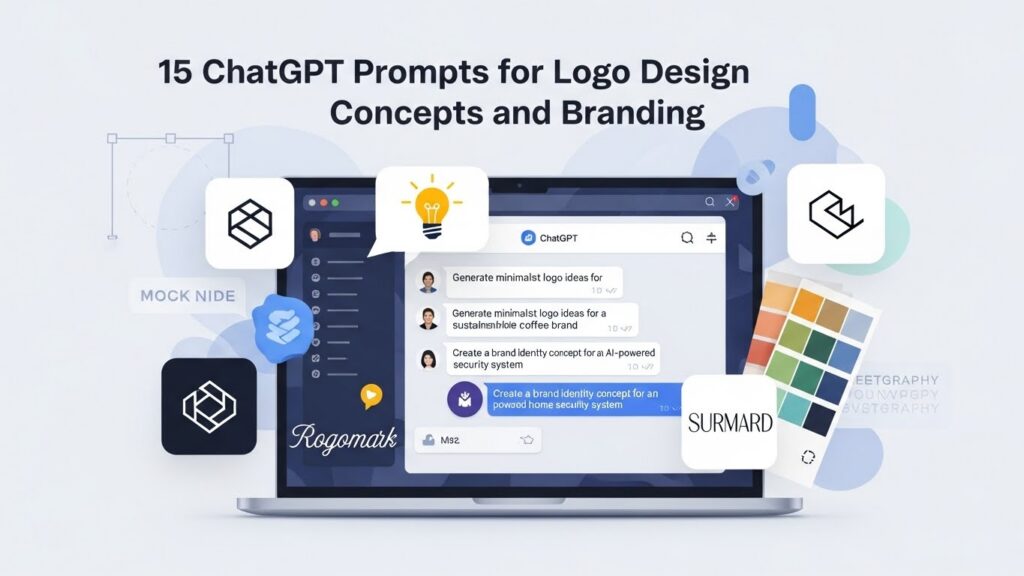
![# 15 ChatGPT Prompts for Logo Design Concepts and Branding Let's talk about the moment you realize you need a logo for your business. You open a blank Canva page, stare at it for twenty minutes, try combining your initials with a random shape, and end up with something that looks like a toddler's arts and crafts project. Meanwhile, professional designers charge $5,000+ for logo packages, freelancers on Fiverr deliver generic clipart with your name slapped on it, and you're stuck between unaffordable quality and affordable garbage. Here's the brutal reality: most small business logos are forgettable at best, actively harmful at worst. Not because founders lack taste, but because they lack the strategic thinking that transforms a pretty picture into a brand identity that communicates value, builds recognition, and differentiates from competitors. A logo isn't decoration—it's visual shorthand for everything your business represents. Getting it wrong means every marketing dollar works harder to overcome that first impression. What if you could access professional branding strategy and design direction without the professional price tag? What if you could develop logo concepts that are strategically sound, visually distinctive, and authentically represent your business? That's exactly what these 15 ChatGPT prompts will help you achieve—strategic brand development and logo design concepts that you can either execute yourself or hand to a designer with clear direction, saving thousands while getting better results. ## Why Most DIY Logos Fail Spectacularly Before diving into the prompts, let's understand why logo design is harder than it looks: **Pretty doesn't equal effective.** A logo can be aesthetically pleasing but strategically wrong—communicating the wrong message, targeting the wrong audience, or looking dated before it launches. **Trends age terribly.** That gradient everyone's using this year? It'll look embarrassingly dated in three years. Chasing trends guarantees your logo has an expiration date. **Complexity kills recognition.** Intricate designs with seven colors, three fonts, and elaborate illustrations might look impressive up close but become illegible at small sizes or in black and white. **Generic symbols communicate nothing.** The lightbulb for "ideas," globe for "global," or handshake for "partnership"—these overused metaphors make you invisible, not memorable. **No strategic foundation.** Most people design logos without first defining brand positioning, target audience, competitive differentiation, or desired perception. You're decorating before building the foundation. **Wrong medium assumptions.** Your logo needs to work on business cards, billboards, social media avatars, embroidered shirts, and black-and-white faxes (yes, some industries still fax). Designing only for one context creates problems everywhere else. **Amateur execution of good concepts.** You might have a brilliant concept but lack the design skills to execute it professionally. Kerning, color theory, proportion, balance—these technical elements separate amateur from professional. ChatGPT can't design the final logo for you, but it can provide the strategic foundation, conceptual direction, and design brief that ensures whatever you create—or commission—is strategically sound and professionally viable. ## How to Use These Prompts for Strategic Branding Getting maximum value from these prompts requires doing the strategic work before the visual work: **Complete brand strategy first.** Who are you? What do you do? Who is it for? Why does it matter? What makes you different? These answers drive design decisions. **Be honest about your constraints.** Budget, timeline, design skills, and production needs (print, embroidery, etc.) all affect what's realistic. **Think beyond the logo.** Your logo is one element of a brand system. Consider how it works with colors, typography, imagery, and tone across all touchpoints. **Avoid aesthetic preferences without strategy.** "I like blue" is irrelevant. "Blue communicates trust and reliability, which aligns with our financial services positioning" is strategic. **Prepare for iteration.** First concepts are rarely final. Plan for refinement based on testing, feedback, and living with ideas before committing. **Know when to hire professionals.** ChatGPT provides strategy and concepts, but complex execution often requires design expertise. Use prompts to create a clear brief for professionals. Now let's explore the prompts, organized by branding and design phase. --- ## Brand Strategy Foundation Prompts ### 1. The Brand Positioning Blueprint ``` I'm developing a brand for [business name/description]. Help me establish strategic positioning before designing anything visual. Walk me through: (1) Defining our target audience—who specifically are we serving? Demographics, psychographics, pain points, aspirations. (2) Our core value proposition—what transformation or outcome do we deliver? (3) Competitive differentiation—what makes us genuinely different from alternatives? (4) Desired brand perception—how do we want to be perceived? What feelings should our brand evoke? (5) Brand personality—if our brand were a person, how would they behave, speak, dress? (6) Non-negotiable brand attributes—what must our visual identity communicate? Make this specific and strategic, not vague marketing speak. This positioning drives every design decision. ``` **Why this works:** Design without strategy is decoration. This prompt establishes the foundation that makes logos meaningful rather than arbitrary. ### 2. The Competitive Brand Audit ``` Analyze competitor branding in [industry/niche]: [list 3-5 main competitors]. For each, describe: their visual identity (colors, style, symbolism), what their branding communicates, who they're targeting, and what makes them distinctive or generic. Then identify: (1) Visual patterns everyone uses—clichés to avoid. (2) Gaps in positioning—what's no one communicating that we could own? (3) Opportunities for differentiation—how can our visual identity stand out while remaining appropriate for the industry? (4) What must we signal to be taken seriously, versus where we can break conventions? I need to understand the visual landscape before designing, so I differentiate instead of blending in. ``` **Why this works:** Understanding the competitive landscape prevents creating a me-too logo that disappears among similar competitors while identifying white space you can own. ### 3. The Brand Archetype and Personality Definer ``` Help me define our brand personality using archetypal frameworks. Our business: [describe what you do and for whom]. Analyze which brand archetype(s) fit best: Creator, Sage, Explorer, Outlaw, Magician, Hero, Lover, Jester, Everyman, Caregiver, Ruler, or Innocent. For our top 2-3 archetypes, explain: (1) How this archetype manifests visually—typical colors, shapes, styles, symbolism. (2) What this archetype communicates to audiences. (3) How to differentiate within this archetype—everyone can't be the "innovative disruptor." (4) Potential visual directions that authentically express this personality. Then create 3-5 mood words that should guide all design decisions. This personality should feel authentic to who we actually are, not aspirational fiction. ``` **Why this works:** Brand archetypes provide proven frameworks for consistent personality expression. They help translate abstract personality traits into concrete visual direction. --- ## Logo Concept Development Prompts ### 4. The Strategic Logo Brief Creator ``` Create a comprehensive logo design brief for: [business name and detailed description]. Include: (1) Company overview—what we do, target audience, positioning. (2) Logo objectives—what must this logo accomplish? (3) Design requirements—where will it be used? Size range? Color vs. black and white? (4) Competitive context—how must we look similar enough to be credible but different enough to stand out? (5) Mandatory elements vs. nice-to-haves. (6) Absolutely avoid—what would be wrong for this brand? (7) Success criteria—how will we know if this logo works? Make this brief so clear that a designer could work from it without further input. This is my roadmap, whether I design myself or hire someone. ``` **Why this works:** A clear brief prevents endless revision cycles and ensures design aligns with strategy. Even DIY designers benefit from structured direction. ### 5. The Logo Concept Direction Generator ``` Based on this brand strategy: [summarize your positioning, audience, differentiation], generate 5 distinct logo concept directions. For each direction, describe: (1) Core visual approach—wordmark, lettermark, abstract symbol, pictorial mark, or combination? (2) Conceptual foundation—what idea or meaning does this approach communicate? (3) Stylistic characteristics—geometric or organic? Modern or classic? Minimal or detailed? (4) Color direction—what palette supports this concept? (5) Why this approach fits our brand strategy. (6) Potential challenges or considerations. Make these genuinely different approaches, not variations on the same idea. I want to explore diverse directions before committing to one. ``` **Why this works:** Exploring multiple distinct concepts prevents fixating on one direction too early. Variety reveals which strategic approach resonates most authentically. ### 6. The Visual Metaphor and Symbolism Explorer ``` I want to explore meaningful visual metaphors for [business type and positioning]. Don't give me generic industry symbols—help me find fresh, unexpected connections. Brainstorm: (1) Direct symbolism—what literally represents what we do? (2) Conceptual metaphors—what abstract concepts (growth, connection, transformation, protection) relate to our value proposition? (3) Hidden meanings—visual elements with dual interpretations or layered significance. (4) Geometric or abstract representations—shapes that communicate feeling without literal imagery. (5) Negative space opportunities—what can we communicate through what's NOT there? For each idea, explain the symbolic connection and whether it's overused or fresh. Push me beyond obvious choices toward memorable distinction. ``` **Why this works:** Meaningful symbolism creates logos with depth and storytelling potential. This prompt moves beyond cliché toward symbols that authentically represent your unique brand. --- ## Typography and Wordmark Prompts ### 7. The Typography Psychology and Selection Guide ``` I'm developing a logo for [brand with positioning]. Help me understand typography strategy: (1) What does typography communicate psychologically? Serif vs. sans-serif, geometric vs. humanist, condensed vs. extended, light vs. bold. (2) What typographic style aligns with our brand personality [specify personality]? (3) Generate 3-5 specific typography direction options ranging from conservative to bold, explaining what each communicates and who it appeals to. (4) How should our typography relate to competitors—similar enough for credibility, different enough for distinction? (5) Technical considerations—must work at small sizes, readable at a glance, works in various weights. Guide me to typography that supports strategy, not just aesthetics. ``` **Why this works:** Typography is half the logo (or all of it for wordmarks). Understanding psychological impact of type choices prevents arbitrary decisions that undermine positioning. ### 8. The Custom Letterform Design Direction ``` I want to create a distinctive wordmark or lettermark for [brand name]. The name is: [provide name]. Our brand positioning: [summarize strategy and personality]. Help me explore letterform modifications that add distinctiveness: (1) Which letter(s) offer the most opportunity for unique treatment? (2) What modifications align with our brand—geometric precision, organic curves, sharp angles, playful connections? (3) How can letters interact—overlapping, connected, separated with intent? (4) Negative space opportunities within letterforms? (5) Should any letters serve double duty or incorporate subtle symbolism? Provide 3-5 specific direction ideas for customizing our wordmark that feel intentional and strategic, not arbitrary or gimmicky. ``` **Why this works:** Custom letterforms create ownable brand assets. This prompt identifies strategic opportunities for distinction through typography modification rather than random flourishes. --- ## Color Strategy and Psychology Prompts ### 9. The Strategic Color Psychology Deep Dive ``` Develop a strategic color palette for [brand with positioning and audience]. Don't just tell me "blue is trustworthy"—I need nuanced analysis: (1) What specific emotions and associations does our brand need to evoke based on our positioning? (2) Which color families support these goals? Consider both expected choices and unexpected alternatives. (3) How does our audience's cultural context affect color perception? (4) What are competitors using, and should we align or differentiate? (5) Generate 3 distinct color direction options with 2-3 colors each, explaining the psychological strategy behind each palette. (6) How will these colors work across contexts—digital, print, products, environments? Consider accessibility, reproduction costs, and versatility. ``` **Why this works:** Color carries psychological weight that can reinforce or undermine your positioning. Strategic color selection enhances communication rather than just looking pretty. ### 10. The Color Differentiation Strategy ``` Everyone in [industry/niche] uses [common color like blue, green]. Our brand: [positioning]. Help me decide: Should we (A) Use the expected color but differentiate through specific shade and combination? (B) Break category conventions with unexpected color that stands out? (C) Use color strategically across brand system but keep logo neutral? For each option, explain: pros/cons, what it communicates, risk/reward, when it makes sense. Then recommend 3 specific color approaches with strategic rationale. I need to make an informed choice about conforming versus defying category norms, not just picking my favorite color. ``` **Why this works:** Color conformity versus differentiation is a strategic decision with real consequences. This prompt helps you make that choice intentionally based on positioning rather than personal preference. --- ## Logo Testing and Refinement Prompts ### 11. The Logo Effectiveness Evaluation Framework ``` Evaluate these logo concepts: [describe or discuss your concepts]. Use professional criteria: (1) Strategic alignment—does it communicate intended positioning and personality? (2) Distinction—is it memorable and differentiated from competitors? (3) Simplicity—will it work at all sizes and contexts? (4) Timelessness—will it age well or look dated quickly? (5) Versatility—does it work in color, black and white, various backgrounds? (6) Appropriateness—is it suitable for the industry and audience? (7) Scalability—legible from business card to billboard? For each concept, provide honest scores (1-10) on these criteria with specific reasoning. Tell me which concept is strongest strategically, even if it's not my favorite aesthetically. ``` **Why this works:** Objective evaluation criteria prevent choosing logos based on personal preference rather than strategic effectiveness. This prompt brings professional rigor to concept selection. ### 12. The Logo Stress Test Scenarios ``` Test this logo concept: [describe concept]. Put it through real-world scenarios: (1) Size extremes—what's the smallest size it remains legible? What details get lost? (2) Color variations—does it work in full color, single color, black, white, grayscale? (3) Context applications—how does it look on: website header, social media avatar, business card, t-shirt, vehicle wrap, trade show banner, email signature? (4) Background variations—works on white, black, colored, photographic backgrounds? (5) Competition—placed next to competitor logos, does it hold its own? (6) Time test—imagine seeing this everywhere for 5 years. Still working? Identify weaknesses and suggest refinements to address failure points. ``` **Why this works:** Stress testing reveals practical problems before expensive production. This prompt ensures your logo works across all actual use cases, not just in ideal presentation. --- ## Brand Identity System Prompts ### 13. The Comprehensive Brand System Builder ``` Develop a complete visual identity system around this logo concept: [describe logo]. Create: (1) Primary and secondary color palettes with specific values (hex, RGB, CMYK, Pantone). (2) Typography system—primary font for headlines, secondary for body text, when to use each. (3) Supporting graphic elements—patterns, shapes, or icons that extend the logo language. (4) Imagery style—photography direction, illustration style, or graphic approach. (5) Spacing and layout principles. (6) Logo variations—primary, secondary, icon only, black and white. (7) Usage rules—minimum sizes, clear space, what NOT to do. This system should feel cohesive while providing flexibility for different applications. ``` **Why this works:** A logo doesn't live in isolation—it's part of a brand system. This prompt creates comprehensive guidelines that ensure consistent, professional brand application. ### 14. The Brand Guidelines Documentation ``` Create brand guidelines documentation for [brand name and logo description]. Structure this as: (1) Brand story—mission, values, personality in brief. (2) Logo specifications—versions, minimum sizes, clear space, approved colors. (3) Incorrect usage examples—what never to do with the logo. (4) Color system—primary and secondary palettes with color codes and usage rules. (5) Typography—approved fonts, hierarchy, sizing. (6) Supporting elements—patterns, graphics, iconography style. (7) Photography/imagery direction—style, mood, dos and don'ts. (8) Voice and tone guidance. (9) Application examples showing correct implementation. Make this comprehensive enough that anyone could apply the brand consistently without direct supervision. ``` **Why this works:** Brand guidelines ensure consistency across applications and team members. This prompt creates documentation that protects brand integrity as you scale. ### 15. The Brandable Assets and Touchpoint Strategy ``` Beyond the logo, help me develop brandable assets for [business type]. Identify opportunities for: (1) Signature colors that become associated with our brand. (2) Proprietary shapes, patterns, or graphic devices. (3) Distinctive typography or custom letterforms. (4) Unique imagery style or photography approach. (5) Sonic branding elements if applicable. (6) Physical elements—packaging, environments, product design. (7) Interactive elements—animations, transitions, micro-interactions. For each asset type, explain: how it extends the logo's language, where it's applied, and how it builds cumulative brand recognition. I want to create a distinctive ecosystem, not just a logo. ``` **Why this works:** Brand recognition comes from consistent execution across multiple touchpoints. This prompt develops a comprehensive asset library that reinforces brand identity beyond the logo alone. --- ## Advanced Brand Strategy Considerations Beyond logo design, understanding broader branding principles creates better results: ### The Evolution of Logo Design Trends **Minimalism dominance.** Current trend favors simple, geometric logos. But minimalism isn't automatically better—it's appropriate for some brands, wrong for others. **Responsive logos.** Modern brands need logos that adapt to context—simplified versions for small sizes, detailed versions for large applications. Design with flexibility. **Dynamic identity systems.** Some brands use flexible systems with variable elements rather than one static logo. This works for certain positioning but requires sophisticated management. **Authenticity over perfection.** Hand-drawn, imperfect elements can communicate authenticity and humanity—appropriate for some brands, unprofessional for others. ### Logo Longevity and Redesign Considerations **Build in longevity.** Avoid trendy elements that will date quickly. Classic doesn't mean boring—it means timeless. **Plan for evolution.** Successful brands refine logos over time rather than complete overhauls. Design with refinement potential. **Know when redesign makes sense.** Merger/acquisition, business model shift, or expansion into new markets might justify redesign. Personal boredom doesn't. **Refresh vs. redesign.** Sometimes logos need modernization without losing recognition. Understand the difference. ### Technical Production Considerations **Vector is non-negotiable.** Logos must be vector format (AI, EPS, SVG) for scalability. Raster formats (PNG, JPG) are for application, not source files. **Color space considerations.** RGB for digital, CMYK for print, Pantone for exact color matching. Design in all color spaces. **Production methods matter.** Embroidery has limitations. Screen printing works differently than digital. Engraving needs different considerations. Design accounts for actual production. **File organization.** Maintain organized file structure with all logo versions, color variations, and supporting assets clearly labeled and accessible. --- ## Your Strategic Brand Identity Starts Now You now have 15 powerful ChatGPT prompts that transform logo design from aesthetic guesswork into strategic brand development. These prompts don't replace designers—they make you a better client who provides clear direction and makes informed decisions. The difference between businesses with forgettable logos and those with distinctive, effective brand identities isn't budget size or design talent—it's strategic thinking before visual execution. These prompts provide that strategic foundation. Here's your action plan starting today: Stop scrolling logo galleries hoping for inspiration that never comes. Stop asking friends "which one do you like better?" without strategic criteria. Stop hiring designers without clear direction, then being disappointed with results. Instead, start with strategy. Choose the Brand Positioning Blueprint prompt and spend one hour defining who you are, who you serve, and what makes you different. Write this down clearly. Then use the Competitive Brand Audit prompt to understand your visual landscape. What are competitors doing? Where can you differentiate? Next, use the Logo Concept Direction Generator to explore diverse approaches. Don't commit to one direction immediately—live with multiple concepts for days. For your strongest direction, use the Logo Stress Test prompt to identify weaknesses before finalizing. Finally, use the Brand System Builder to extend your logo into a comprehensive identity that works across all applications. Whether you design the final logo yourself or hire a professional, you'll now provide strategic direction that ensures effective results. You'll make informed decisions rather than aesthetic guesses. You'll get better outcomes at lower cost because you've done the strategic work. The version of yourself with a distinctive, effective brand identity that communicates value, builds recognition, and differentiates from competitors isn't built through accidental aesthetics. It's built through strategic thinking, intentional choices, and comprehensive execution. Your brand identity doesn't require a Fortune 500 budget or award-winning design agency. It requires strategy first, aesthetics second, and consistent execution always. Your memorable brand is one strategic prompt away. Stop decorating. Start strategizing. What does your brand stand for?](https://promptsgarage.com/wp-content/uploads/2026/01/15-ChatGPT-Prompts-for-Logo-Design-Concepts-and-Branding-1024x576.jpeg)